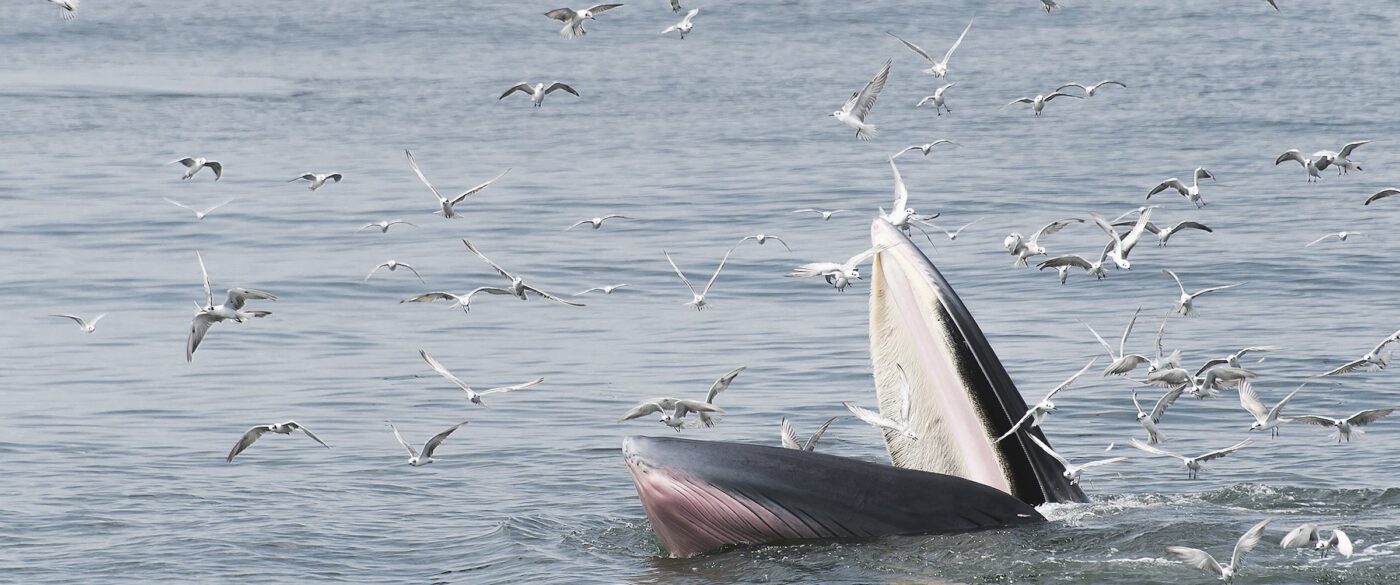
Come to Thailand to study tropical marine ecology and conservation!
This program is an outstanding investment in your future as an environmental scientist, marine biologist, or in other related fields! This 4 weeks summer course focuses on tropical marine ecology, and how human/ecosystem interactions impact wildlife and the marine and near-shore ecology. Building on 25 years of experiential studies in Thailand, this course with ISDSI will equip students with an understanding of tropical marine ecology as well as practicalresearch skills.
The Gulf of Thailand is an outstanding place to examine anthropogenic (human) impact on marine and coastal ecosystems. This course will examine in detail three specific issues to better understand larger questions of sustainability, ecology, and the human-nature link.
Jump to our ISDSI Course Syllabi Page for the course syllabus.
Course highlights
- Direct observation of marine species (whales, sea turtles, reef fish and corals)
- Complete an Independent Field Research Project, working with faculty to study a topic of your choosing in depth
- Work directly with the Thai Department of Marine and Coastal Resources (DMCR) on sea turtle veterinary care, whale research, and rescue operations
- Travel through the coasts and islands of the Gulf of Thailand
- Hands-on coral reef observation and restoration work, in partnership with Global Reef (if you do not have a diving certification, you will be required to complete both Open Water and Advanced Open Water certifications). Open Water and Advanced Open Water are an additional fee. See below for more information.
- Earn an ISDSI certificate in Marine Ecology
SEA TURTLES
Sea turtles are impacted by multiple stressors that threaten their populations world-wide. Climate change, habitat loss, pollution, and other factors negatively impact turtle breeding and survival. This course works directly with the Thai Department of Marine and Coastal Resources (DMCR) and their sea turtle rescue operations, including learning about sea turtle veterinary care under the supervision of a DMCR veterinarians.
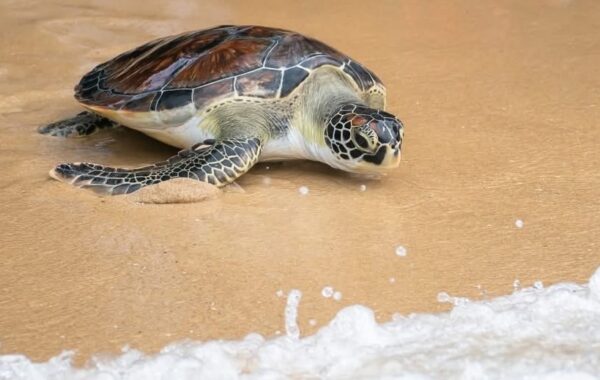
A green sea turtle (Chelonia mydas) heading into the surf in the Gulf of Thailand.
WHALES
One of the key issues globally to helping support and grow marine mammal populations is understanding how shipping traffic and other human contact impacts whales, dolphins, and other cetaceans. This course studies Bryde’s/Eden’s whales in the Gulf of Thailand in direct partnership with the Thai Department of Marine and Coastal Resources (DMCR) — ISDSI’s lead instructor for this section previously worked with DMCR and maintains an active relationship with their whale research team. Students learn from and work alongside DMCR researchers, eco-tourism operators, and other stakeholders in whale conservation.
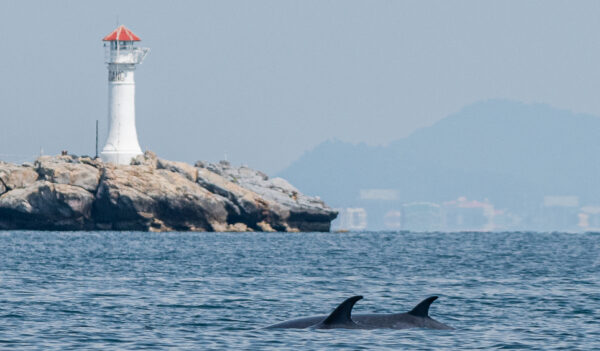
Bryde’s whales off the coast of Thailand.
CORAL REEFS
Coral reefs are an important part of global marine ecosystems. During this course we will examine human impact on the reefs and work directly with Global Reef, a long-established marine research and coral restoration program based on Koh Tao. Students take part in reef observation, monitoring, and hands-on coral restoration work alongside Global Reef’s team, gaining experience most visiting divers never have the opportunity to learn.
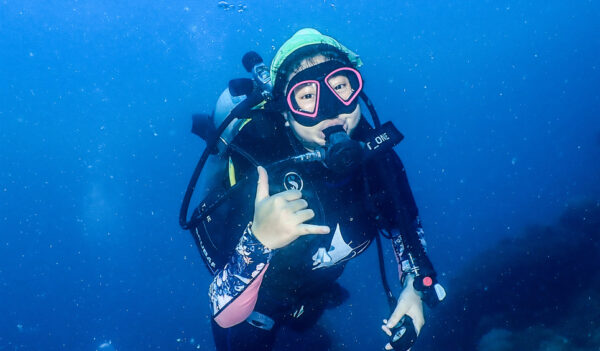
Diving the reefs of Southern Thailand.
Course Modules
Module 1: Sea Turtles
The course begins in Chiang Mai with a seminar and course overview, before traveling to the coast to focus on sea turtle conservation. Students work directly with the Department of Marine and Coastal Resources (DMCR) at their sea turtle rescue operations, including learning about sea turtle veterinary care under the supervision of a DMCR veterinarian. Students also study sea turtle habitat and the human impacts and pressures facing sea turtle populations, along with the role of sea turtles in marine ecology and the effects of climate change on turtle reproduction.
Module 2: Whales
This module travels to a coastal area where shipping and whale interactions are actively studied and managed. Students work directly with the Department of Marine and Coastal Resources (DMCR) — ISDSI’s lead instructor for this course previously worked with DMCR and maintains a close relationship with their research team. Students observe primarily Bryde’s whales, possibly the elusive Irrawaddy dolphin, and learn from DMCR researchers, community members, and other stakeholders in whale conservation and eco-tourism.
Module 3: Coral Reefs
The final module travels to the islands of the Gulf of Thailand to study reef ecology and related species. Students who do not yet have their Open Water and Advanced Open Water certification will complete their training with our dive partner Hydronauts, a RAID dive center on Koh Tao with an excellent reputation for training divers with strong technical skills.
After certification, students work with Global Reef on coral reef observation, monitoring, and restoration, contributing directly to ongoing research.
This course includes extensive diving; the number of dives varies depending on conditions and opportunities during the course, and includes certification dives as well as research and restoration dives.
We will also be talking with key stakeholders and community members, studying eco-tourism, sustainable livelihoods, fishing, and the challenges of managing human impact in a popular tourist destination.
We will then return to Chiang Mai for final seminars and presentation of each student’s Independent Field Research Project.
Diving certifications
We work with Hydronauts Diving on Koh Tao in the Gulf of Thailand. Hydronauts certifies through the RAID network, similar to PADI and other certifications. The RAID Open Water is equivalent to other Open Water certifications. Their RAID Explorer 30 is similar to the PADI Advanced Open Water Certification. Other certifications are available through Hydronauts, and if you are already an experienced diver you may have the opportunity to gain additional certifications during this program. Please check the Hydronauts website for current pricing, as well as any additional courses you might be interested in.
Interested in Applying?
Go to our How to Apply to ISDSI Summer Programs page.
Email us at [email protected] if you’re thinking of applying! We can help you with your application and the required materials.
(Photo credits to Wild Encounter Thailand, Department of Marine and Coastal Resources, and ISDSI)